
Why hide it when you can accessorize it?
There are estimates that the global population of ostomates is somewhere around 13 million and growing, and yet there is such a taboo about it in English-speaking countries that a lot of people don’t even know what an ostomate is. Heck, even my spellcheck keeps going off every time I type the word.
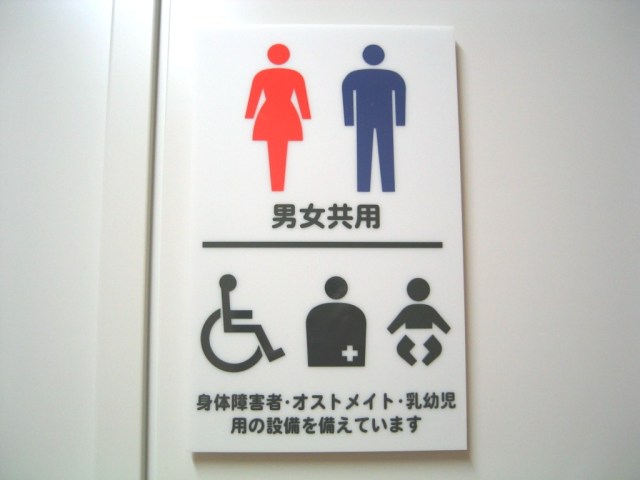
There is a little more visibility about it in Japan through, and you may see restrooms labeled as suitable for ostomates using either the Japanese word “オストメト” or pictogram of an abdomen with a cross on it to indicate the presence of a colostomy bag or similar apparatus required by ostomates as a result of a surgical stoma (opening) due to illness or accident.
▼ A Japanese restroom sign indicating it has the proper facilities for ostomates both by name and pictogram (bottom center).
It tends to be considered a hidden condition, but logically there shouldn’t be any more shame in having equipment for a stoma than there would in a cast on a broken leg. That’s the standpoint of the Japan Welfare & Medical Fashion Association (JWMF), who are working hard to destigmatize medical equipment that people rely on, often through no fault of their own.
The JWMF works to infuse medical appliances with a sense of art and fashion, so they are seen less as burdens and more as a new way of life with the potential to even be enjoyed. This year, they held the O-Mu-Tsu fashion show at the Osaka-Kansai Expo to highlight some stylistic advancements in adult diapers.
Their next mission is the Stoma Néo-Art Project, which aims to add some style to the colostomy, ileostomy, or urostomy bags that ostomates wear. In doing so, these pouches can be viewed as something to show off rather than something to hide. They plan to create designs with the help of traditional Kyoto kimono craftsmanship from Kimura Senshow, Tomiya Orimono, and Nob Miyake. Using their skills in nishijin weaving and kyoyuzen dying, bags finer than my entire wardrobe will be created.
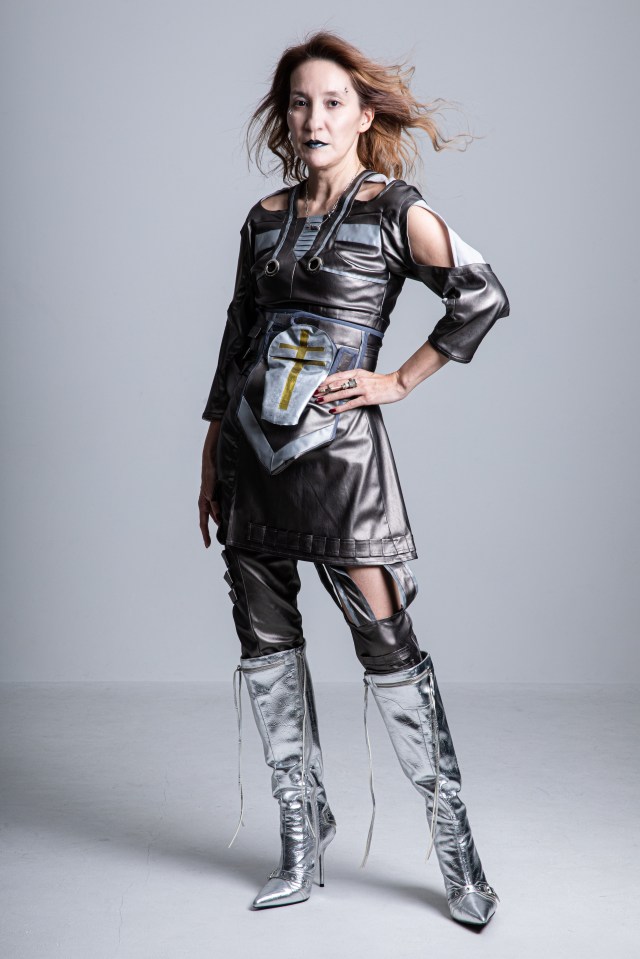
▼ Despite the use of kimono techniques, the styles on display will cover a wide range, from sporty…

▼ …to futuristic.
This project will culminate in a fashion show at La Galerie Broubon in Paris, France, sometime in the latter half of 2026. This will be JWMF founder and head Kei Hirabayashi’s second show in the fashion capital of the world, his previous one having taken place in 2022 and featured only models in wheelchairs. Hirabayashi has dedicated his life to fusing social welfare, healthcare, and fashion.
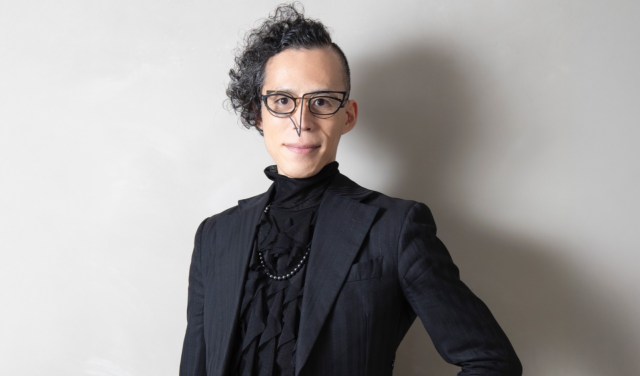
▼ Kei Hirabayashi
He will be helped on this project by Raita Yano, Chief of Gastrointestinal Surgery at Hiroshima Memorial Hospital, and Yosuke Ishii, the founder of the Japan Poop Society and creator of the UnColle feces analysis game. One feature model for the show has already been selected as Emma Otsuji Pickles, who at age 16 developed chronic intestinal pseudo-obstruction, a rare and incurable condition where her body reacts adversely as if there is a blockage in her intestines even though none exists.
▼ Emma Otsuji Pickles

Announcing a colostomy bag fashion show will likely draw giggles from some people, but that’s exactly the social conditioning that JWMF hopes to dispel, one step at a time. Once the taboo is lifted, this can really be seen for what it is: an impressive combination of medical technology, fashion, sociology, and Japanese craftsmanship, all working together to improve the quality of life for millions of people.
Source: JWMF, PR Times, Comfizz
images: Wikipedia/Shoyuramen, PR Times
● Want to hear about SoraNews24’s latest articles as soon as they’re published? Follow us on Facebook and Twitter!



