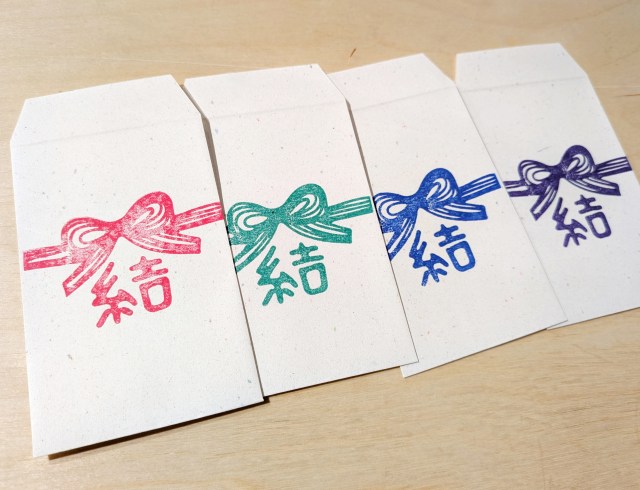
A simple envelope leads to funding children’s aid, and providing steady work for people with disabilities.
New Year’s is a major event in Japan, much like Christmas is in the West, full of cultural traditions that span back decades, and even centuries. One of those is the practice of adults handing children small, colorful envelopes filled with money in a custom called otoshidama, meant to share good fortune at the start of the year.
Originally, the concept of otoshidama is said to have come from dividing rice cakes known as kagami-mochi, offered to the New Year deity. among family members. In time, this transformed into adults giving children money in the decorative envelopes that are now called pochi-bukuro.

However this year, this little envelope could do a whole lot more than just make a single child happy, with a new envelope named “Musubi”.
Musubi is a pochi-bukuro that at first glance looks surprisingly minimalist in comparison to other types, sporting a traditional noshi ribbon and the single kanji of 結 (“musubi,” meaning “to connect” or “to tie together”). Underneath that simple exterior, however, are three layers of benefits that take the long-held tradition of giving to others to a broader scale.
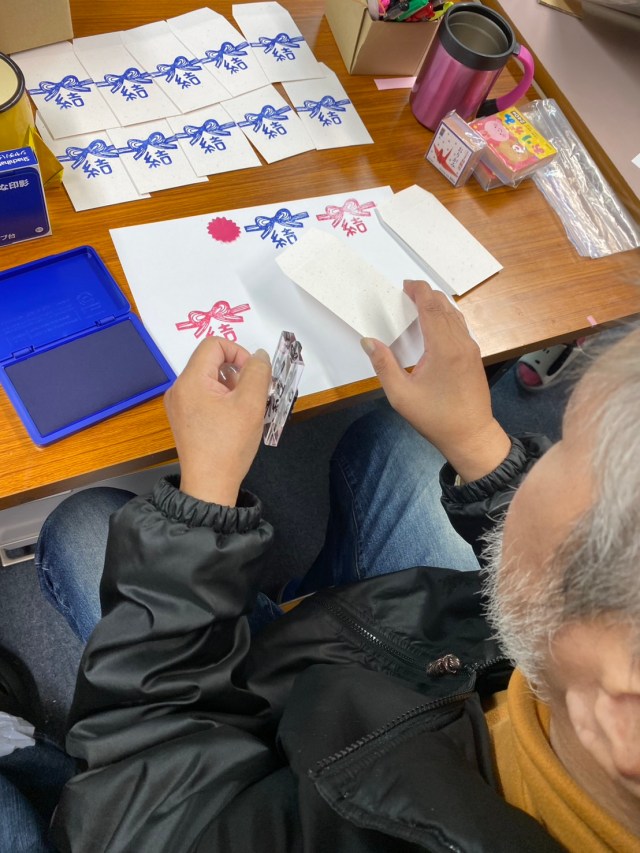
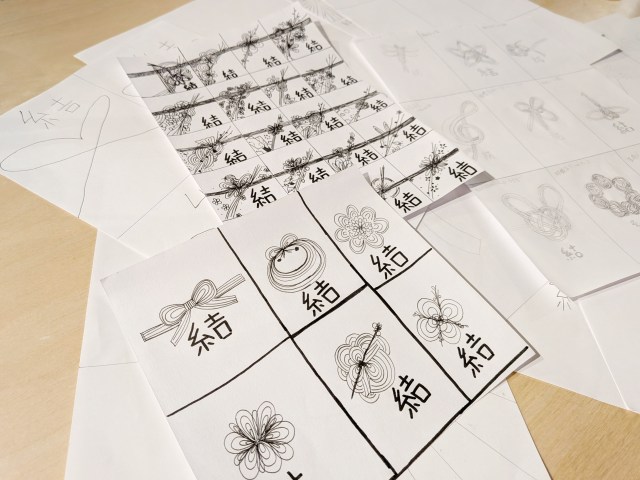
First, if you purchase Musubi, it contributes towards creating stable employment for people with disabilities. The design work, illustration, and packaging are all handled by employment support facilities, which provide ongoing jobs rather than one-off charity work. A supply of work to be done is the lifeblood of these programs, so the hope with Musubi is that it will eventually help create employment opportunities at these support facilities across Japan.
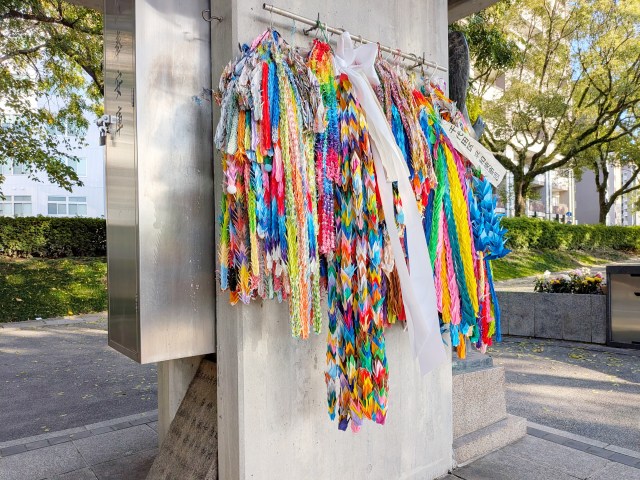
Second, the envelopes are made from recycled origami crane paper. If you have ever visited a shrine, you may have seen bundles of origami cranes, senbazuru, that are folded to be a symbol of hope and peace. The paper that Musubi uses comes from the countless origami cranes sent from around the world to the Hiroshima Peace Memorial Park.
Third, Musubi directly supports children in need. With each Musubi costing 150 yen (US$0.96), excluding tax, it might seem a little pricey for a single envelope, but 50 yen from every single one is donated to the Nippon Foundation Children’s Support Fund, which helps children facing challenges such as poverty or serious illness.
While the creators have dubbed the idea “Otoshidama 2.0”, the word “otoshidama” isn’t written on the Musubi envelope itself , so it’s just as easy to use it for any other occasion, such as celebrations, greetings, or even just a simple note, and there aren’t many who would say no to more opportunities to support welfare activities. To help people with lots of giving to do, Musubi comes in several sets, from small four-envelope packs to a more sizable 40-envelope nundle.
Even if you don’t find yourself joining in the New Year festivities and passing out otoshidama to eagerly awaiting children, Musubi will make any small gift or note just that little extra bit special, making the world a better place one envelope at a time.
Source: PR Times
Top image: PR Times
Insert images: Pakutaso, PR Times
● Want to hear about SoraNews24’s latest articles as soon as they’re published? Follow us on Facebook and Twitter!


