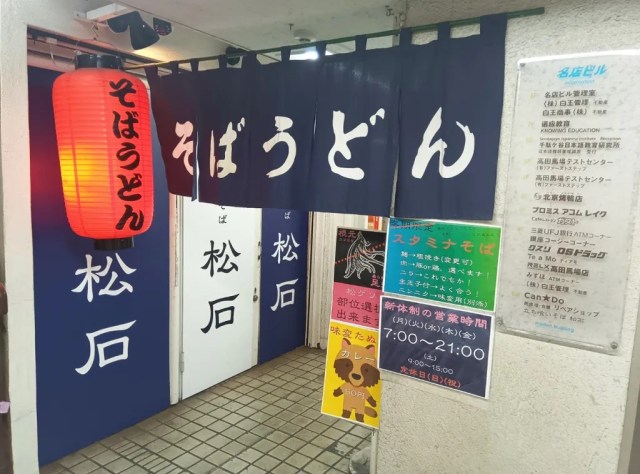
Bears are everywhere in Japan these days – even in our noodles.
There’s an unusual linguistic quirk in Japan in which you’ll often see soba noodle restaurants offering a dish called “niku soba,” or “meat soba.” While the name makes it seem like the topping options could be wide open, niku soba (or niku udon, if you’re at a restaurant that serves udon noodles) generally means thin strips of pork or beef. Which one? It varies by restaurant, but surprisingly most people are OK with the vagueness.
However, at Matsuishi, a noodle restaurant in downtown Tokyo’s Takadanobaba neighborhood, they’re a little more precise. When you tap the button for niku soba on the order touchscreen, you’re then given the option to choose the specific type of meat you want. As shown in the photo below, the option at the bottom is ground pork (豚挽肉), and above that are beef (牛), chicken (鶏), and pork (豚).
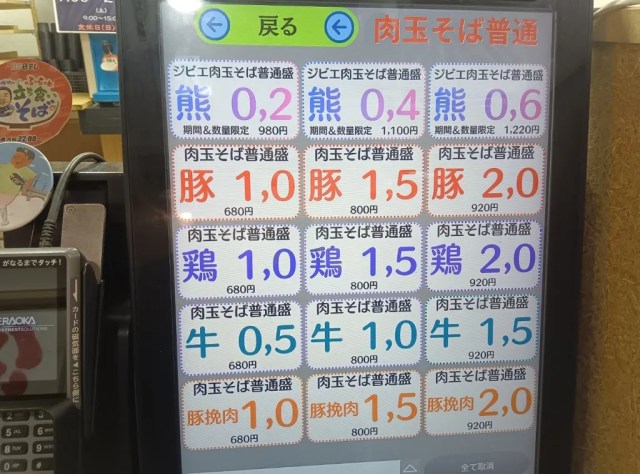
Oh, and the top row, with the kanji 熊? That’s for if you want the meat in your meat soba to be bear.
Yes, the kanji of the year is also the special of the month at Matsuishi, which as of January 13 is offering bear soba. This isn’t at all a common dish in Japan, and even bear meat itself is usually pretty hard to find, especially in the big city. Matsuishi’s got it though, and so our soba-loving Japanese-language reporter Seiji Nakazawa decided to buy himself a bowl.
In contrast to their precision regarding meat types, the numbers on Matsushi’s order screen are kind of mysterious, but they seem to be indicating the amount of meat you get with your noodles, with the small, medium, and large-size bear soba having 20, 40, or 60 percent of the meat of a baseline bowl of pork soba. Still, even the largest, the 0.6 bear soba, is pretty affordable at 1,220 yen (US$8), so that’s what Seiji chose.
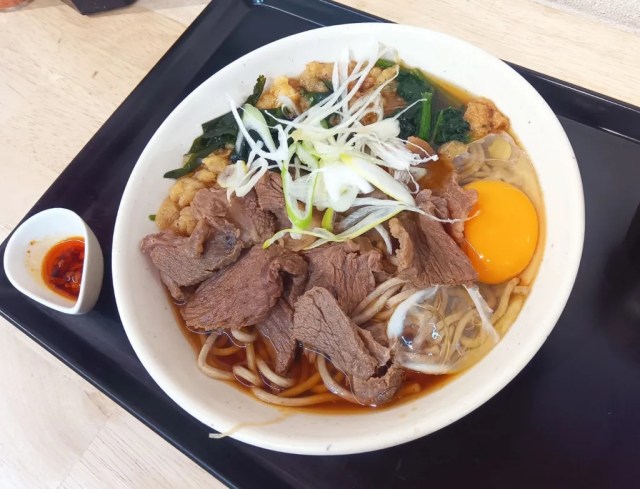
His fears about not having a filling portion disappeared as the staff set his soba in front of him. Seiji took a moment to admire the abundant strips of thick meat floating on the surface, surrounded by tempura flakes, greens, an egg cracked into the broth to cook, and a sprinkling of sliced green onion.
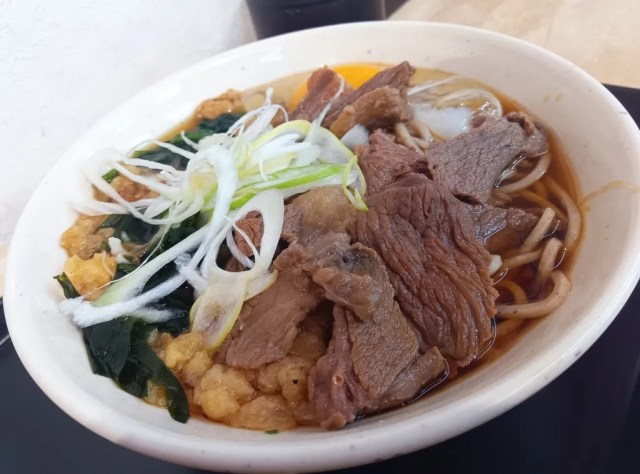
Seiji had eaten bear a few times before this, and his recollection is that the meat can sometimes be tough and sinuous. Honestly, he wasn’t sure it’d be a good choice to use for niku soba, since you can’t cut the meat into smaller pieces if the firmness makes it too hard to chew on a big chunk.
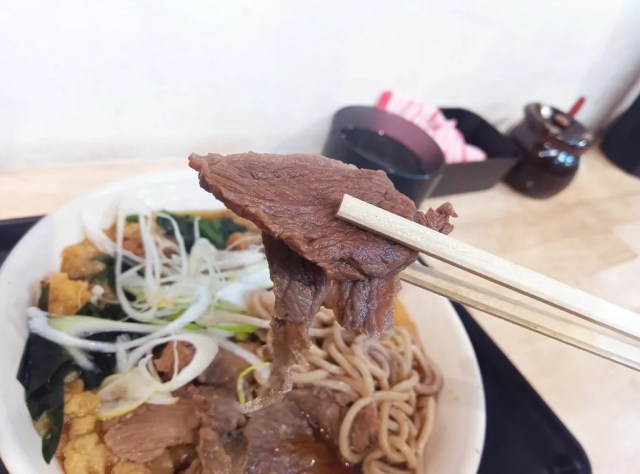
But this turned out to not be an issue at all. Though firm, the bear meat had tenderized while stewing, and as he bit into it, Seiji’s taste buds were greeted by what he describes as a rich umami sensation with both sweet and savory notes. As he chewed, the taste of the broth that the bear meat had soaked up were released, blending together in an inviting harmony that smoothed out the gaminess that bear can sometimes have, making Seiji truly appreciate the skill of Matsuishi’s cooking staff. Speaking of the broth, Matsuishi has a unique recipe that, unlike many other noodle restaurants, uses no sugar or mirin (sweet cooking sake), but still exhibits a deep, rich flavor thanks to adding Kyushu-style soy sauce, sweeter than the kind used in other parts of Japan, to the dashi stock.
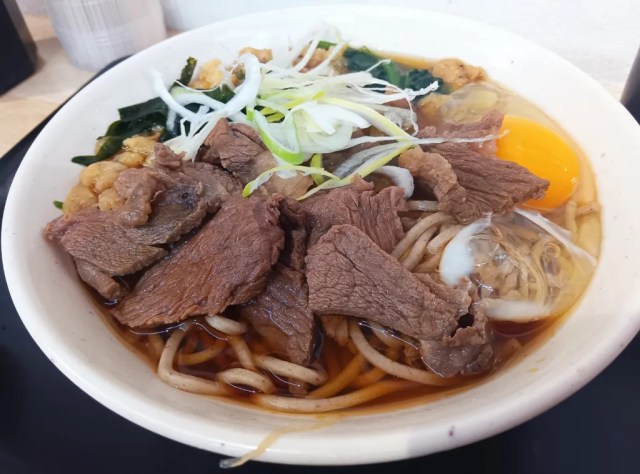
Seiji had gone into this taste test expecting a rustic eating experience, perhaps one that would be too rustic for a city slicker like him to handle. Instead, he’d been given an elegant opportunity to challenge and broaden his palate, and while Matsuishi’s bear niku soba is a limited-time/while-supplies-last deal, he’s glad to have tried it, and would eat it again. And if you’re craving more wild game, there’s a place in Chiba that you’ll want to check out too.
Restaurant information
Matsuishi / 松石
Address: Tokyo-to, Shinjuku-ku, Takadanobaba 1-16-7, Meiten Building basement level 1
東京都新宿区高田馬場1-26-7 名店ビル B1F
Open 7 a.m.-9 p.m. (Monday-Friday), 9 a.m.-3 p.m. (Saturday)
Closed Mondays and holidays
Twitter
Photos ©SoraNews24
● Want to hear about SoraNews24’s latest articles as soon as they’re published? Follow us on Facebook and Twitter!


![Testing Japan’s latest food hack trend: Adding instant corn soup powder to popcorn[Taste test]](https://lh3.googleusercontent.com/blogger_img_proxy/AEn0k_tf3wlUNcPYevBBW_wpXbHLk8jsBDnVZRQ3uDNARWyFcc2gP_1lXSF3GWEe-BYfIinJd8DIRXi_IjOki1nq-bBTuLJVoE1i8QG9AZV77u10_Zw8Mr8IVWRwxXg3UneMO9SXGmzGwTymInJdXfyfeYNBmLHP20tmLEU=w680)
