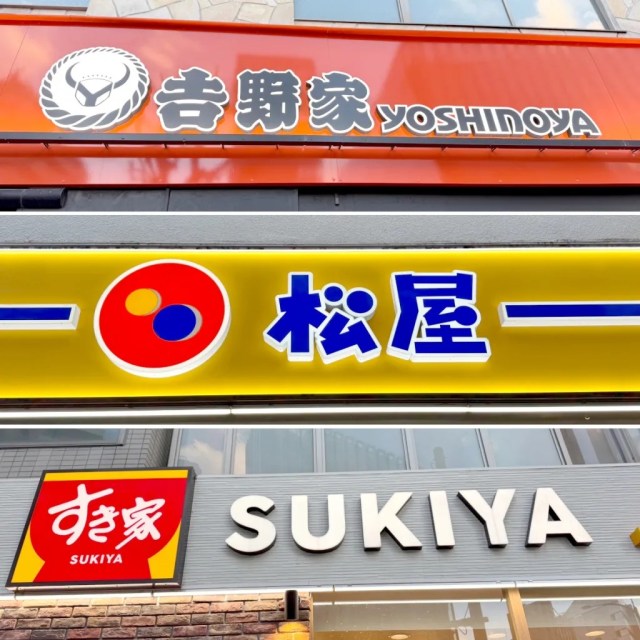
We go looking to see if there’s a devil in the details at Japan’s big-three beef bowl chains.
Long ago, back when Yoshinoya was the undisputed king of the gyudon (beef bowl) world, gyudon was a very simple thing, just a bowl of white rice topped with simmered beef and sliced onion. In time, though, Yoshinoya’s upstart rivals, Matsuya and Sukiya, started offering other toppings to give diners more variety, and in doing so began to chip away at Yoshinoya’s supremacy of the sector.
Yoshinoya adapted by expanding its offerings as well, adding new gyudon variations to its repertoire, and sometimes the three chains’ ideas overlap. For example, right now Yoshinoya, Matsuya, and Sukiya all have an onioroshi ponzu gyudon on their menu.
Ponzu, a sauce made from citrus juice, mirin (sweet cooking sake), and bonito stock, has already risen to popularity overseas, but foodies outside Japan may not be as familiar with the term onioroshi. Though it literally translates to “demon grater,” the true identity of onioroshi is significantly less terrifying, as it’s coarsely grated daikon radish.
▼ Onioroshi graters get their name because their cutting surfaces resemble the jagged teeth of demons from Japanese folklore.

Grated daikon can have a strongly spicy sensation, but when mixed with ponzu, fans find the result a refreshing and invigorating tartness. One such fan is our Japanese-language reporter P.K. Sanjun, who recently made it his mission to make the rounds of Japan’s big-three gyudon chains and taste-test each of their takes on onioroshi ponzu gyudon.

P.K.’s first stop was Yoshinoya, where he ordered the Onioroshi Ponzu Gyudon for 660 yen (US$4.30).

Because it’s coarser than regular grated daikon, and accompanied by sliced negi (green onion), the onioroshi adds a stimulating crispness to the texture of the gyudon. Since, as mentioned above, grated daikon is more of a sensation than a flavor, and ponzu isn’t overpoweringly sour, the mixture is a pleasant but unobtrusive enhancement. Yoshinoya’s beef bowl being a pretty orthodox and directly delicious example of the dish makes for an easy pairing with the onioroshi, and P.K. found no room for complaint here.
Up next, Sukiya’s identically named, but differently priced, 600-yen Onioroshi Ponzu Gyudon.

Sukiya’s serving style is unique in that the onioroshi comes on the side, allowing you to add the amount you want at your preferred timing. So if you want to toss it all on right from the beginning, you can, or if you want to start off eating your beef bowl without the daikon and ponzu, then add it in the second half for a heavier ratio, that’s an option too.

In terms of flavor, to P.K.’s palate Sukiya’s onioroshi ponzu gyudon felt very similar to Yoshinoya’s. For their standard gyudon seasoning, Sukiya already uses a subtle touch of citrus that’s not noticeably present in Yoshinoya’s or Matsuya’s versions of the dish, but with the ponzu adding citrus to all of our taste test subjects today, that differentiating factor no longer applied to its onioroshi ponzu beef bowl. Again, though, Sukiya’s is tasty with nothing that needs criticizing.
Finally, P.K. dug into Matsuya’s 560-yen Onioroshi Ponzu Gyumeshi.
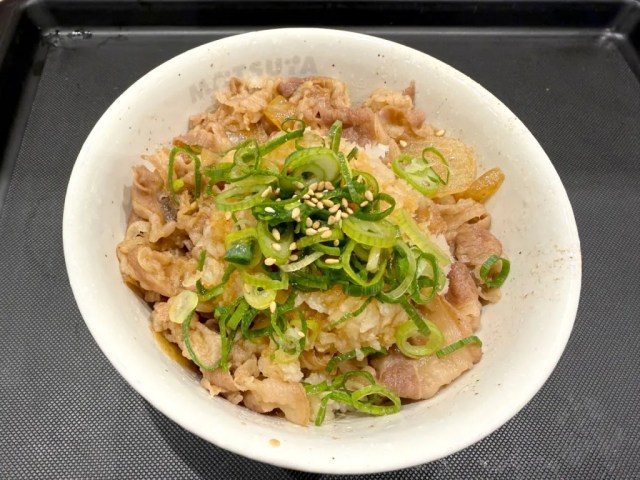
“Gyumeshi,” meaning “beef rice,” is simply the name Matsuya uses for its beef bowls, but they’re the same as gyudon. And sure enough, the eating experience here was one that had by now become familiar to P.K.: a nice crisp texture to the daikon, a pleasant hit of sour citrus from the ponzu, and a reliably delicious baseline gyudon flavor underneath.

So, with P.K.’s impression being that their flavors are very similar, this is a case where there’s really no “best” out of the three, right? Actually, the strong similarities, in P.K.’s mind, make it easy for him to zero in on one recommendation: Matsuya. Since he couldn’t notice a big difference in flavor between the three, his taste buds would be equally happy with any of them, and so they defer the decision to his wallet, which can’t help noticing that Matsuya’s onioroshi ponzu gyudon is the most affordable of the bunch, 40 yen less expensive than Sukiya’s and 100 yen less than Yoshinoya’s. Sure, that’s probably not going to make or break your finances, but with gyudon fans making the dish a regular part of their diet, Matsuya essentially giving you a “buy-six-get-one-free” deal makes theirs the clear choice.
Onioroshi grater photo: Wikipedia/Haragayato
All other photos ©SoraNews24
● Want to hear about SoraNews24’s latest articles as soon as they’re published? Follow us on Facebook and Twitter!



