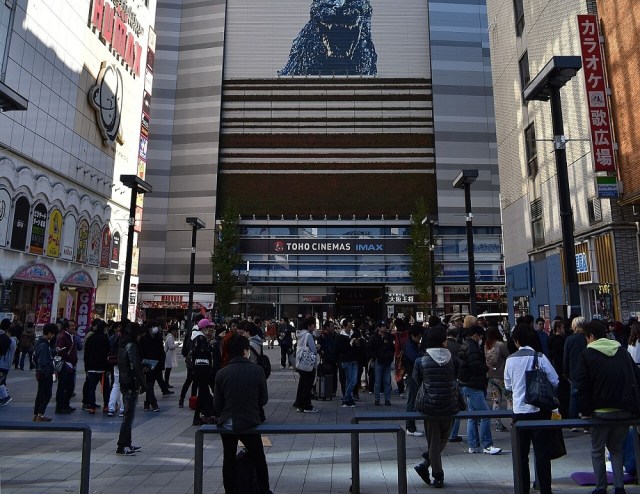
Kabukicho plaza has become a symbol of teen vagrancy in the capital.
The Kabukicho district of Tokyo’s Shinjuku Ward is one of the liveliest entertainment areas in the cities, packed with bars, restaurants, theaters, arcades, karaoke parlors, and the city’s densest concentration of host and hostess clubs. From March 11 to 16, the neighborhood also had a fleet of food trucks parked in it. Vendors filled not only the plaza next to the Toho Building (the skyscraper with the giant Godzilla head poking out of it), but also occupied a 60-meter (197-foot) long stretch of the road that runs between the two of them. Both food and beverages were for sale, and there were even tables and chairs set up for patrons to sit on as they dined and drank alfresco.
However, Kabukicho Kitchencar Park, as the event was called, wants to do more than just give people an opportunity for some extra open-air fun as the weather warms up. The Shinjuku Ward government organized the food truck gathering in this specific location because if trucks were parked in the plaza and along the street, it would make it harder for groups of delinquent and homeless teens to gather there.
Since this part of Kabukicho is “next to” (yoko in Japanese) the Toho Building, it’s become known as To-yoko (not to be confused with the Toyoko train line, which gets its name from connecting Tokyo and Yokohama). To-yoko has become a gathering place for groups of unsupervised teens and adolescents, and the situation goes beyond loitering. Many of them are runaways or homeless, camping on the streets for extended periods of time and earning money through dubious, dangerous means such as prostitution, drug-running, or other criminal activity, often while developing substance abuse problems of their own.
▼ A report from last April, when two girls, aged 16 and 17, were taken into custody after attempting to exchange a large quantity of sleeping pills.
The situation has become increasingly visible in recent years, and as the number of such teens has grown, many of them have also formed co-dependent or predatory relationships with each other. Citizen and business owner groups have periodically organized events within the To-yoko plaza (officially called the Kabukicho Cinecity Plaza) in an attempt to both prevent such teens from congregating and to improve the image of the neighborhood. Last week’s food truck event, though, was initiated by the Shinjuku Ward government itself, and occupied the street between the plaza and the Toho Building too. “Kabukicho is one of the symbolic faces of Shinjuku,” said Shinjuku Ward head Kenichi Yoshizumi. “We will continue striving to make it a comfortable recreational space.”
Though they’re only one part of Kabukicho, the To-yoko plaza/street comprises one of the largest open-all-night public spaces in the area. The hope is that with the delinquent/runaway community being loosely formed, moving the groups out of To-yoko will cause them to scatter and dissolve once they lack a single large gathering place, which will in turn make it harder for teens to be so easily targeted for exploitation or find criminal avenues of income through word of mouth. That still leaves the question of how runaways, drug addicts, and other teens in desperate situations are supposed to get the help they need in order to lead more wholesome lives, which will need to be addressed through other social welfare programs administered by either the Shinjuku Ward, Tokyo municipal, or national government.
Kabukicho Kitchencar Park will be taking place again between March 23 and 26 as well as on March 30, and appears to be planned as an irregular but recurring event.
Source: Yomiuri Shimbun, Tokyo Sports Web, Kabukicho Kitchencar Park official website
Top image: Wikipedia/ただの記事執筆者
● Want to hear about SoraNews24’s latest articles as soon as they’re published? Follow us on Facebook and Twitter!



.jpg)