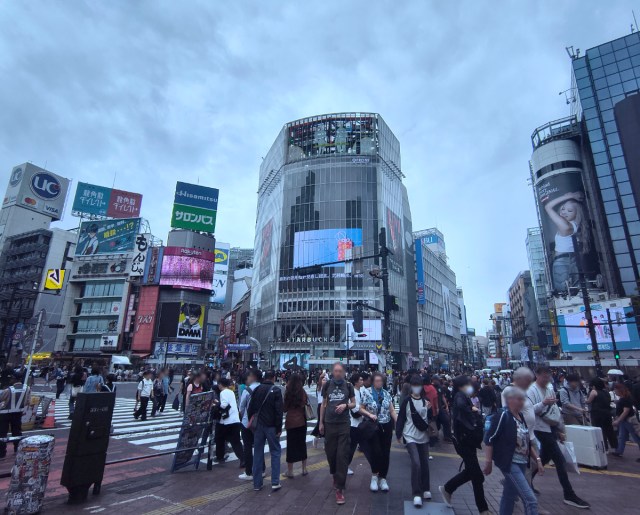
If you’ve ever felt irritated around this part of Tokyo, this might be the reason why.
The area around Shibuya Station is one of the busiest places in all of Tokyo, and right now it’s a nightmare to visit. That’s because the so-called “once in a lifetime” construction project currently taking place around the station – work is scheduled to continue right up to fiscal 2031 – is impeding foot traffic, funneling crowds through narrow walkways that were never designed to act as major thoroughfares.
While navigating the crowds is enough to give you a headache, there’s another, less obvious element at play: mosquito noise. This high-pitched frequency, similar to the buzz of a mosquito, has become a topic of discussion online in Japan, with some people saying children and young people are particularly bothered by it, as it’s more audible to them than those in middle-age.
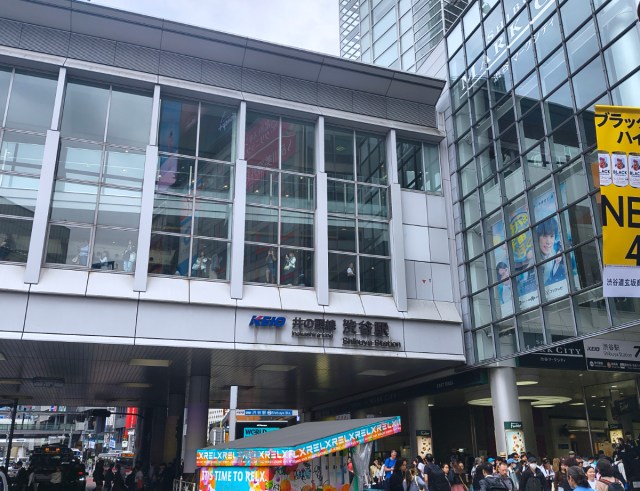
Our roving reporter Mr Sato, who’s in his 50s, was surprised when even he could hear the loud buzz on a recent visit to Shibuya. Admittedly, he does usually listen to music with earbuds while out and about, but this time, when keeping an ear out for high-pitched frequencies, he could hear the buzz from the moment he stepped off the train and onto the Ginza Line platform at the station.
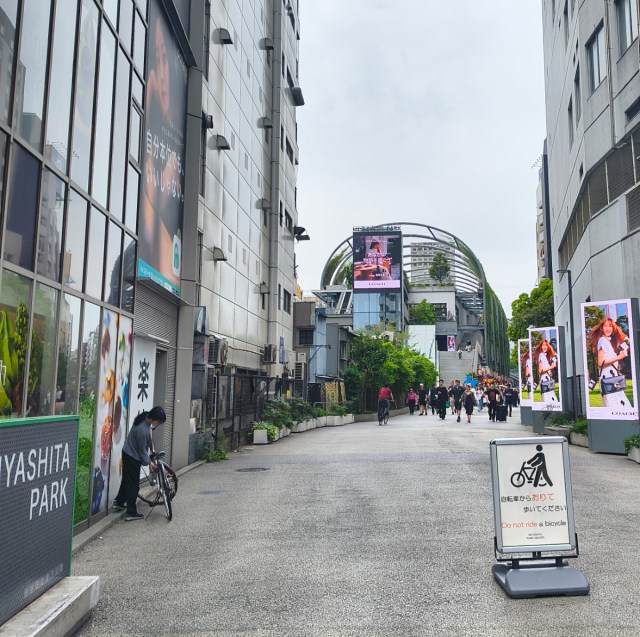
Even as he walked around the Mark City building and the JR Hachiko Exit, the noise seemed to follow him wherever he went, and when he walked over to Miyashita Park, where a lot of people say the noise is the loudest, he could clearly hear the high-pitched, ringing sound. With so little background noise, he now knew he wasn’t imagining it – it was a constant uninterrupted ringing.
Then, outside the front of the Seibu Shibuya department store, the sound was even louder than before. Here, it reached unpleasant levels, bordering on unbearable.
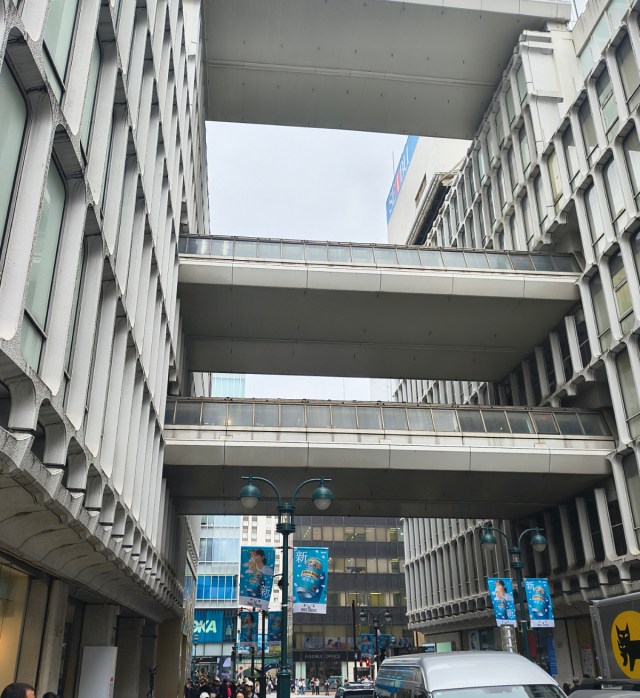
The sound was now stuck in his head and not going anywhere. In an effort to escape the ringing, he wondered if the busy Centre Gai thoroughfare might drown out the noise.
▼ Nope. Even in front of the Udagawa-cho police box, the ringing was still there.
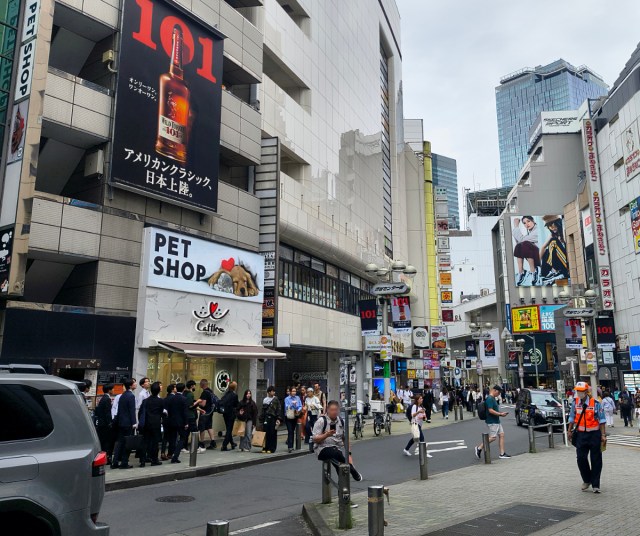
He eventually felt that the sound dimmed a little around Tokyu Hands, but then he could hear it again in front of Abema Towers.
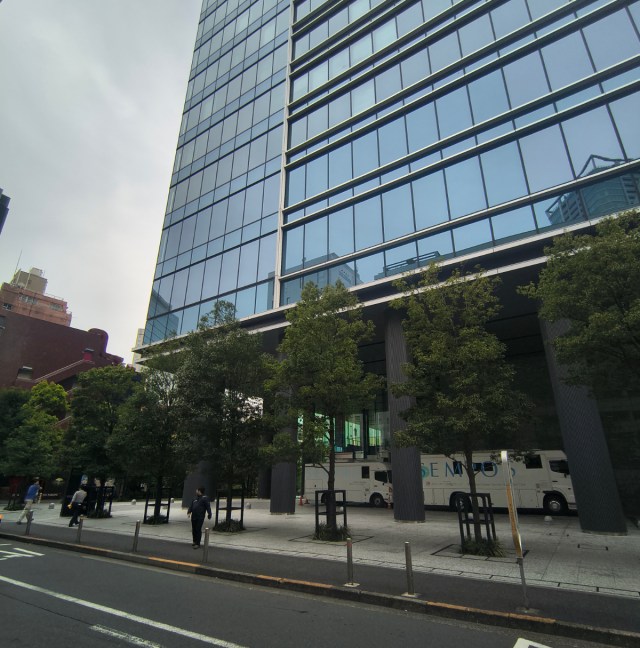
Now he was far away from the station, and in a relatively quieter area of the neighbourhood too, in front of the NHK Broadcasting Center.
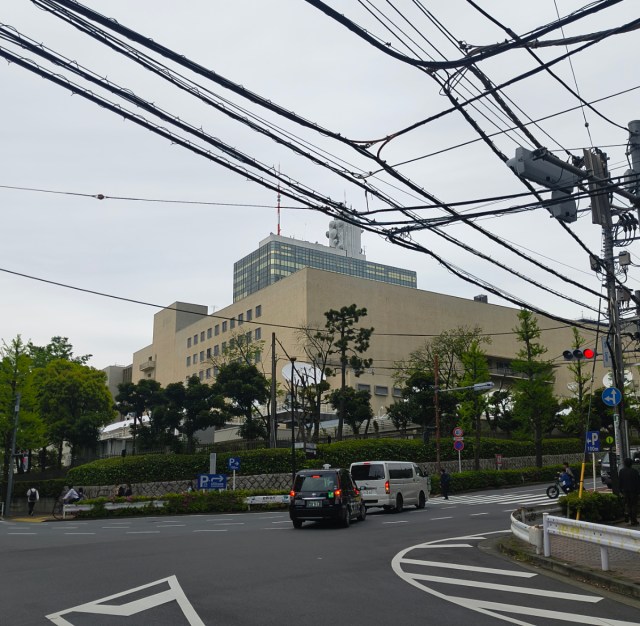
The incessant ringing followed him still, and could even be heard near the entrances and exits of Yoyogi National Stadium. Was the high-pitched sound always this loud? It was now so pronounced he thought it was strange that he’d never noticed it before.
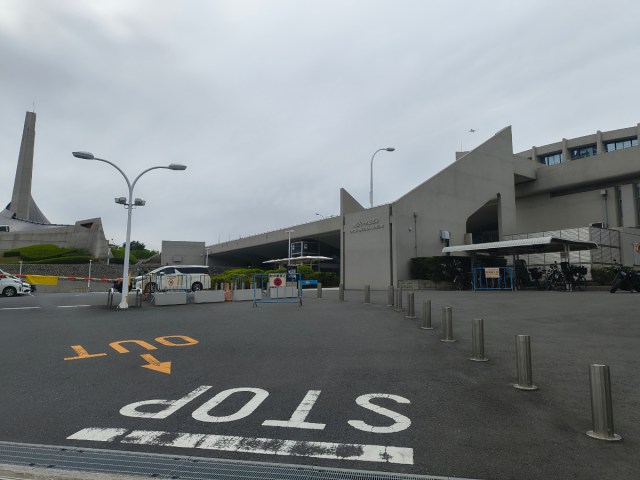
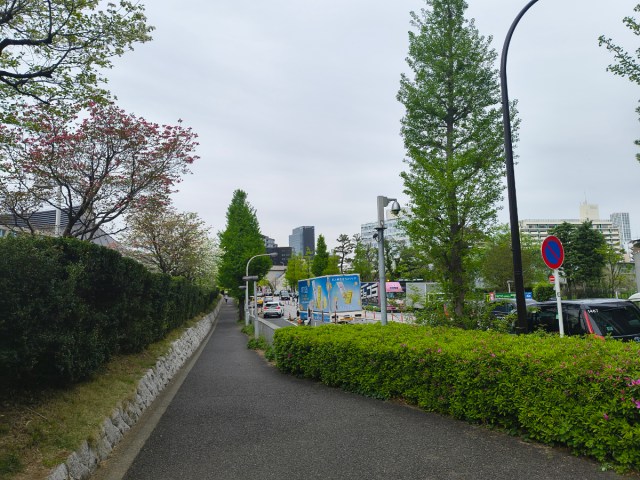
At this rate, he was almost near Harajuku and he was beginning to wonder if it would follow him all the way there too. But that’s when, remarkably, the noise suddenly stopped, around the area where the advertising trucks were parked in the photo below.
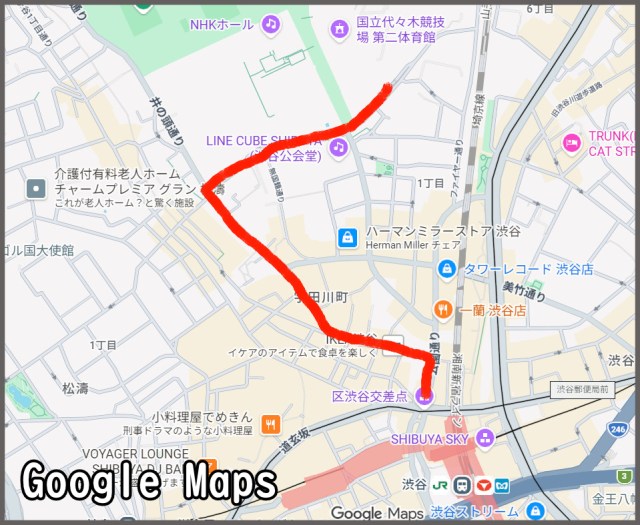
According to Mr Sato, the mosquito noise could be heard all along the route below, from Shibuya Station at the bottom through to Yoyogi National Stadium at the top.
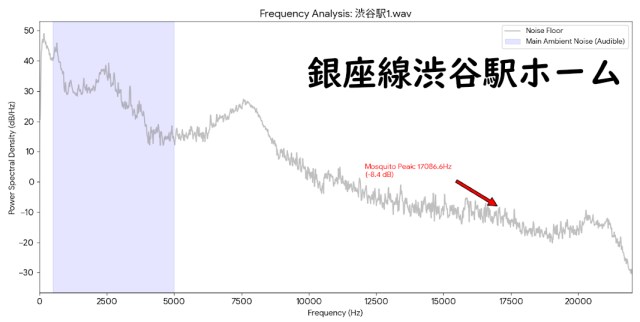
During the journey, Mr Sato pressed record on his smartphone in the hopes that he could find a way to analyse the noise. He was so desperate to get to the bottom of it all that he put the data into Gemini Pro, which revealed that a sound resembling a mosquito buzz was present at the Shibuya Station Ginza Line platform…
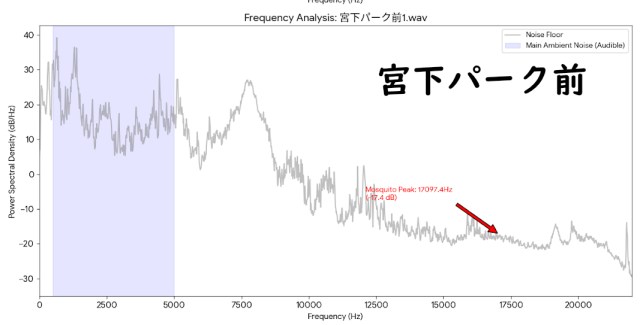
▼ …in front of Miyashita Park…
▼ …and in front of Seibu Shibuya.
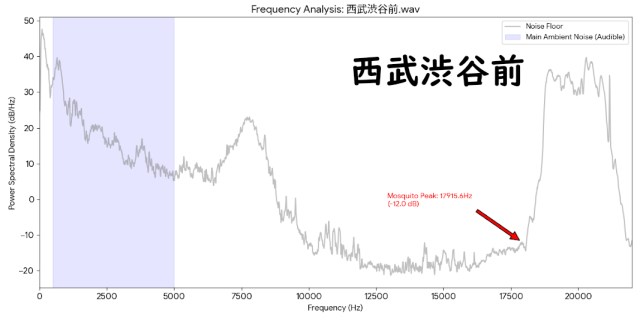
The frequencies were determined to be 17086Hz, 17097Hz and 17915Hz respectively, and when he plotted the relationship between frequency range and volume on a graph, he could indeed see a response at 17-18 kHz, and even higher frequencies.
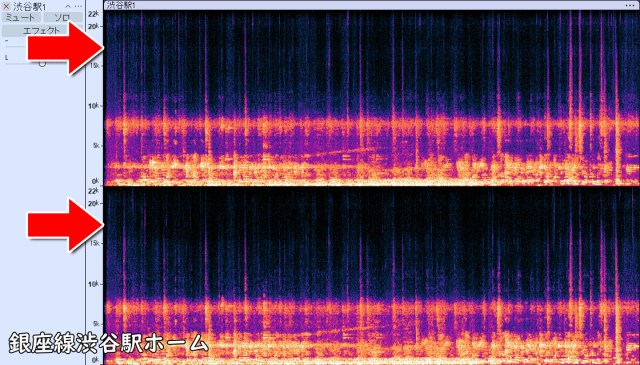
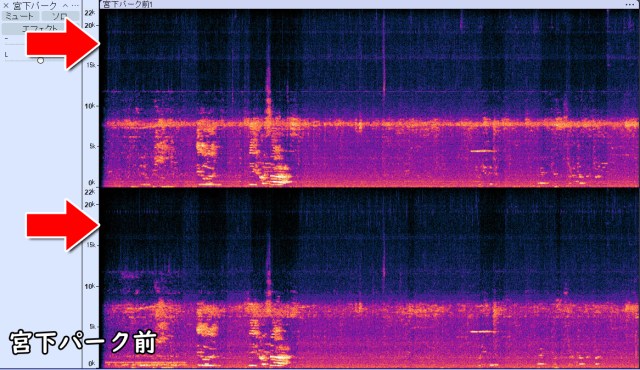
To verify Gemini’s results, Mr Sato used Audacity, an audio editing software that provides detailed frequency analysis, to visualise the sound’s frequency components. He also performed a spectrogram analysis, which revealed even more interesting findings. In each image below, the arrows indicate the 17 kHz frequency band associated with the mosquito tone.
On the Ginza Line platform, a faint 17 kHz signal is visible as a thin horizontal band. It is extremely quiet compared to the surrounding noise and would not be noticeable unless you are specifically listening for it.
Next, in front of Miyashita Park, there are two thin lines running horizontally between 15kHz and 20kHz. This indicates that a sound of the same pitch is continuously ringing, so you should be able to hear the mosquito tone more clearly than at the Ginza Line platform.
Finally, in front of Seibu Shibuya (above), a clear, thick line appeared horizontally in the 20kHz frequency band. This indicates that the sound was incomparably louder than at the previous two locations.
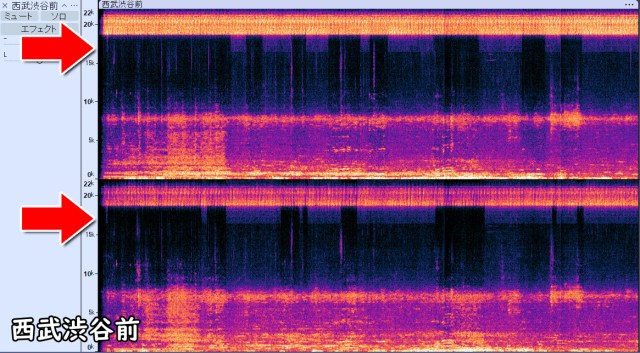
This may have been due to the sound reflecting and amplifying between the two buildings around Seibu Shibuya, making it more noticeable there than in other areas. But there may be another reason for the noise – frequencies of around 17 kHz to 18 kHz are used to deter pests such as rats.
In an area so rife with vermin it’s sometimes referred to as “rat land”, it wouldn’t be surprising if the high-pitched noise has been utilised for this purpose. However, with rats commonly seen on the streets of Shibuya after dark, if the sound is meant to be a deterrent, it doesn’t appear to be working.
Either way, what’s undeniable is the fact that the mosquito noise isn’t an urban myth as we were able to confirm that it really does exist. So if you ever start to feel annoyed around Shibuya, there really might be a reason for it, and it might be fixed by popping in some earbuds.
Photos © SoraNews24
● Want to hear about SoraNews24’s latest articles as soon as they’re published? Follow us on Facebook and Twitter!


![Testing Japan’s latest food hack trend: Adding instant corn soup powder to popcorn[Taste test]](https://lh3.googleusercontent.com/blogger_img_proxy/AEn0k_sOgKNtNs9eNO3skkVrd0UVERlCvW6aEOQKqmXiabN5hOwAgqU1E1MepiW-Ronbb0hynaRyivAoaRVvyGL_V1gHZOsGYrJ9blkeldUroLVlvozwTJEhHWhnP4qTCPrqtMQ8XMqXnaLBAFbZg2bpRB4CI0yKufCPcKo=w680)
