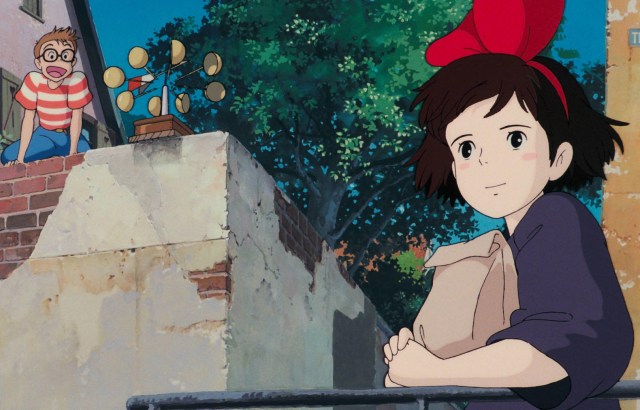
Kiki’s next adaptation will draw from her original, pre-anime roots, but will audiences give it a chance?
Earlier this year, Kiki’s Delivery Service had its first-ever IMAX screenings in North America, and this month the large-scale remaster of the Studio Ghibli anime classic will be arriving in Japanese theaters too. That’s not the only reunion in the works for fans of the young witch, though, as a live-action Kiki’s Delivery Service adaptation has been announced.
This isn’t going to be a one-shot theatrical feature, either. Instead, the live-action Kiki’s is going to be a TV/streaming series, and it’s going to be produced in partnership with the U.K.’s BBC.
In recent years, we’ve seen quite a few Studio Ghibli anime films make the leap into one form or another of live-action. My Neighbor Totoro and Spirited Away became stage plays and Nausicaa of the Valley of the Wind was turned into a kabuki performance, with Princess Mononoke soon to follow suit. And while it was a sequel instead of a direct adaptation, there was a live-action movie follow-up to Whisper of the Heart.
However, BBC Studios Kids and Family won’t be coordinating with Studio Ghibli for the project, nor will they be working with Ghibli’s parent company Nippon Television Holdings. Instead, the live-action Kiki’s Delivery Service series is being made in partnership with Kadokawa, the Japanese publisher of the original Kiki’s Delivery Service novel from author and creator Eiko Kadano.
Also part of the team is U.K.-based production company Wheel in Motion, and scriptwriting is being handled by Irena Brignull, whose most prominent credits include 2015’s The Little Prince and 2014’s The Boxtrolls. The series is planned for 10 30-minute episodes. Casting and a release window have yet to be announced.
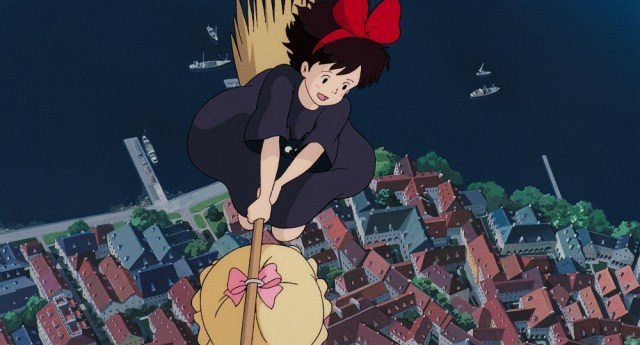
After decades of live-action productions of Japanese franchises made in foreign countries being a recipe for disaster, there have been a number of high-profile crowd-pleasers in recent years, including the Super Mario Bros. movies, Netflix’s One Piece, and even the Totoro stage musical, which was produced and performed in the U.K. The BBC’s Kiki’s Delivery Service, though, likely has a uniquely steep uphill fight for acceptance from fans, since it’s pulling from source material that itself is largely overshadowed by another preexisting adaptation.
Kadano’s original Kiki’s Delivery Service was released in Japan in 1985, four years before the Hayao Miyazaki-directed Ghibli anime adaptation premiered in Japanese theaters. Kadano then went on to write five Kiki sequel novels between 1993 and 2009, plus three more side-story books between 2016 and 2022. But despite the first novel wining multiple awards for children’s literature, the Ghibli anime film is far, far more famous internationally, and even within Japan, if you mention “Majotaku” (the abbreviated version of Majo no Takyubun, Kiki’s Japanese title), people are much more likely to think of the anime. Without additional prompting, many people won’t even think of the book at all.
The result is that, in many people’s minds, the Ghibli version of Kiki’s Delivery Service is what the story, setting, and characters are supposed to look, sound, and feel like. And while the novel and anime versions aren’t wildly different, an adaptation of the novel specifically is less likely to heavily borrow from the aesthetics, music, and pacing that viewers of the Ghibli version are used to and expecting. That disconnect has made it hard for previous attempts at adapting Kiki to live-action, such as the 2014 Japanese movie or 2017 stage musicals in Japan and the U.K., from gaining significant traction among audiences.
With the BBC series planning to focus primarily on the first book, the same portion of the series as the anime did, it’s probably going to be even harder for the new live-action version to avoid being compared to the Ghibli classic. Still, Kadano herself is excited about the adaptation, saying “I’m certain that it’s going to be a wonderful program. I can’t wait to see the series take shape,” and if the new live-action series can manage to establish and communicate its own unique appeal, the upside is that there’s a lot of story after that first book to pull from should the series get renewed.
Source: Cinema Today
Images: Studio Ghibli
● Want to hear about SoraNews24’s latest articles as soon as they’re published? Follow us on Facebook and Twitter!


