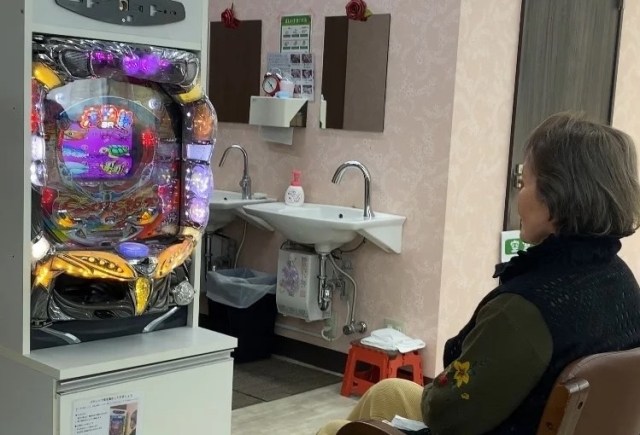
Better living through chrome-plated balls.
A lot of negative things have been said about pachinko over the years. The pinball-like game’s parlors are noisy, garish blights on communities that encourage quasi-gambling and rudely told me to go away when I tried to use their free bicycle pump a few times. But they do have their positive points as well. For example, they weren’t nearly the vectors of contagious disease that everyone thought they were.
Now the game is also changing the lives of people with disabilities in assisted care living facilities, thanks to Global Standard, a company based in Gunma Prefecture that specializes in repurposing gaming machines for use as specialized health equipment.
The pachinko market is highly competitive, and it is important for a parlor to have a high turnover of machines, as new machines always draw big crowds. This means that older machines need to be removed to make room for the new ones, even though they’re in perfectly good condition. Global Standard saw this as an opportunity to acquire quality machinery that would otherwise go to waste.
▼ Although I usually hate the aesthetics of pachinko machines, they do kind of brighten up rooms like this.
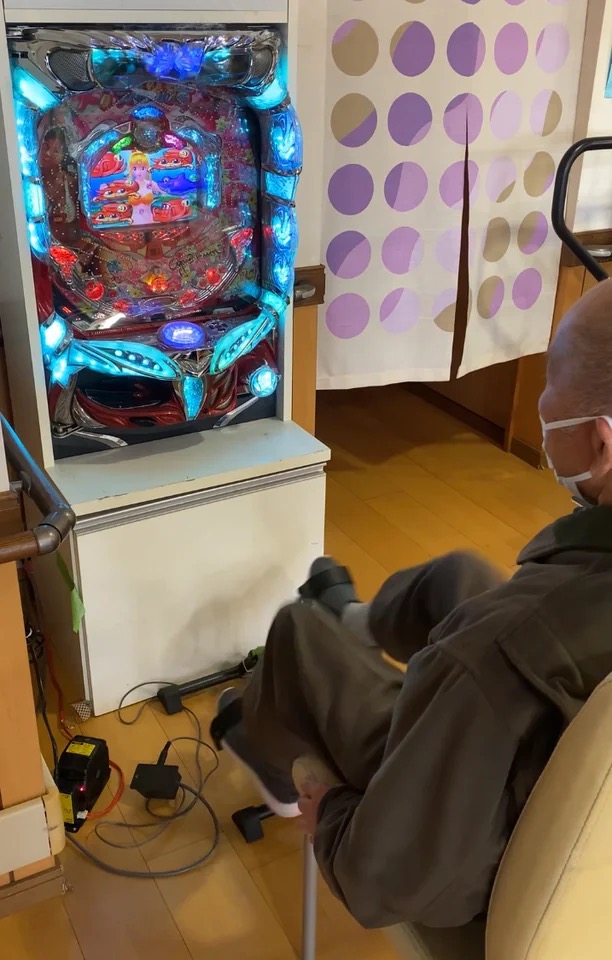
After acquiring the machines, the company modifies them with patented techniques to encourage voluntary physical activity rather than having staff make them come out of their rooms for exercise. To do this, the machines are controlled by regular rehab equipment, such as a grip strengthener or foot pedal, depending on the player’s physical ability. Usage is also recorded so staff can monitor the residents’ exercise time precisely.
Another aspect of Global Standard’s work that makes this different from a typical donation of gaming equipment is that it’s a circular business model. Because of the pachinko industry’s high machine turnover, it uses an extensive recycling system to reduce costs and waste. Normally, if a machine is donated somewhere, it exits this cycle and would probably be thrown away at the end of its life, but Global Standard also oversees the removal from facilities and ensures the pachinko machines go back into their regular cycle of life.
One such machine was installed in the disability support facility Katsura-so in Gunma Prefecture. As a result, staff reported that residents who rarely left their rooms now come out on their own to play the pachinko machine. They also said that residents are interacting more and seem genuinely happier overall. Not only that, but after a report by NHK, interest in Katsura-so shot up, and other facilities have also expressed interest in similar machines.
Reactions in online comments have been mixed, with some hoping they get similar machines if they ever end up in assisted living conditions and others arguing that pachinko, even with the gambling element removed, could be an addictive game with the potential to create problems rather than solve them.
“That is true recycling. Do slot machines next!”
“That’s a good idea. It’s better than the kids’ games they make those people play.”
“But is pachinko fun without the gambling? Hopefully, they can trade the balls for pudding or something.”
“I hope they disable the annoying sounds those things make.”
“I’d pay money for one of those.”
“Is this a good thing? I’m not sure going from shut-in to pachinko addict is an upgrade.”
“They’ll only get the machines that were flops, like Gundam SEED.”
“They’re just making more pachinko addicts.”
The concern that pachinko is considered an addictive pastime is valid, but the real dopamine kick from playing the game in its natural environment is the ability to win or lose money from it. In other words, pachinko addiction essentially a gambling addiction on par with sports betting or casino games, wherein players constantly chase the dragon of expecting that next play to be the big one they’ve been waiting for.
Because of that, in an effort to capitalize on this addiction, the makers of these machines also go all out in trying to design them to be as attention-getting as possible with dazzling visuals and popular IPs. They are also designed to be as comfortable to play as possible, so gamblers don’t experience fatigue and can stay at the machines longer to feed them money.
▼ The machines do everything they can to take your mind off the repetitive action of a grip strengthener.
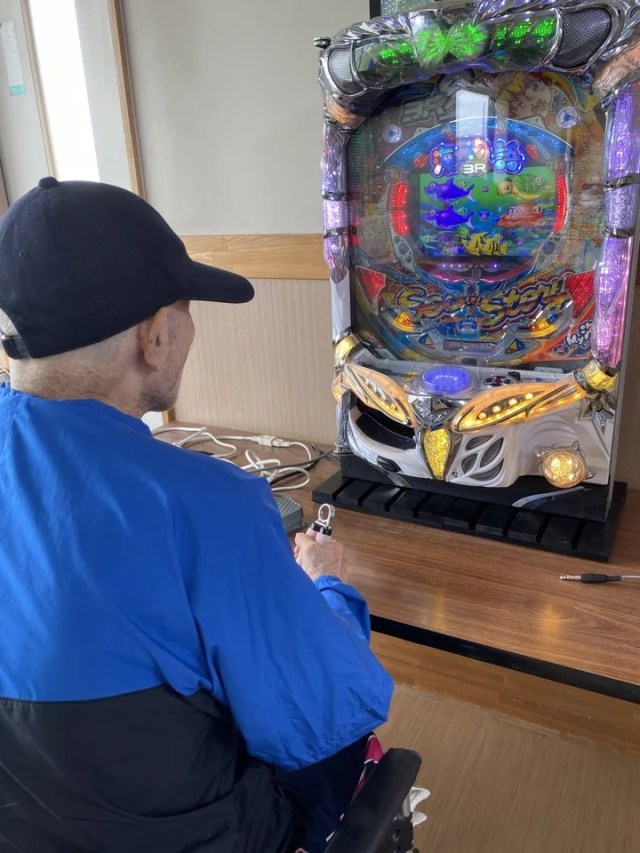
All of these shady tactics to drain real-world pachinko players of their money coincidentally work in the favor of Global Standard and care facilities. It makes the games highly appealing, comfortable, and engaging, but by removing the monetary aspect, it stops short of being a clinical gambling disorder and resides more on the level of something like Candy Crush in terms of addictiveness.
That might still not sound ideal when it comes to caring for people with disabilities, but I know if my time ever comes to enter such a facility, I’d want the one with real games rather than pat-a-cake, even if it is, ugh, pachinko.
Source: MyNavi News, PR Times (1, 2, 3), Hachima Kiko
Top image: PR Times
Insert images: PR Times (1, 2)
● Want to hear about SoraNews24’s latest articles as soon as they’re published? Follow us on Facebook and Twitter!


