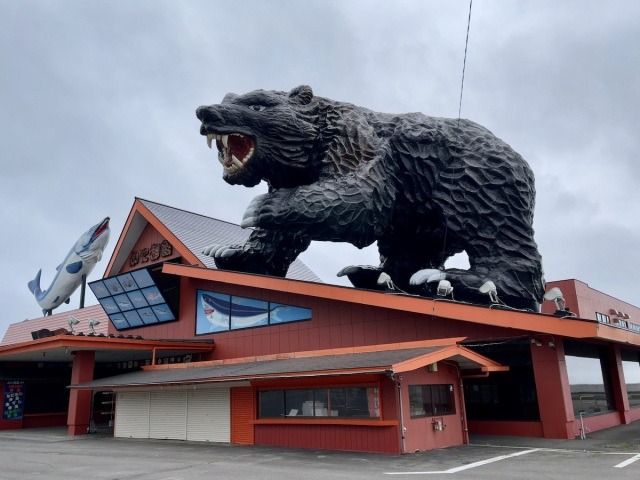
It bear-ly beat out the second-place kanji.
A little while back, after writing my fifth or so article about bear-related news in Japan, I thought to myself, “You know, I bet ‘bear’ is going to win Kanji of the Year this time around.” And even though the increasingly chilly weather and increased hunting activity seem to be slowing the incidents recently, it’s hard to argue against calling 2025 “the year of the bear” in Japan.
And sure enough, on 12 December, head monk Seihan Mori at Kiyomizu Temple in Kyoto once again grabbed his ink brush and wrote the following…
▼ “Bear”
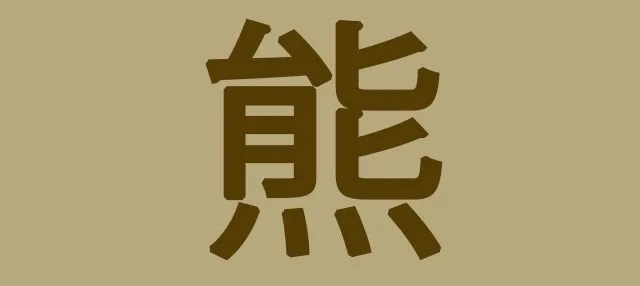
This is the 30th time the Kanji of the Year was decided, based on votes from people across the country to decide which character encapsulated the year best. This year the kanji for “bear” was elected by 23,346 of the over 280,000 total votes.
The main factor was certainly the record-high number of bear encounters and attacks, which resulted in disruptions to public services and intervention by the Ministry of Defense. But in addition to that, the current tensions with China at the same time four pandas were scheduled to be returned left many wondering how long it would be before we could to see those beloved bears again. Although it wasn’t mentioned in reports, “bearish” could very well describe the state of the economy overall, too (though when talking about financial markets, Japanese business commenters use the English loanword “bear” instead of kuma, the Japanese word for bear and how the kanji is read).
▼ News report showing the ceremonial calligraphy
The vote was actually incredibly close to with the kanji for “rice” (米) coming in just 180 votes behind “bear” to land in second place. Shortages of Japan’s most relied-upon food, resulting in skyrocketing prices and the release of “old old old rice,” was certainly a defining event of 2025 as well. The tricky tariff negotiations this year with the USA, also called “Biekoku” (米国, literally “rice country”) in Japanese, may have played a part too.
The third place kanji was the one for “high” (高), both signifying the rising prices of just about everything this year as well as the first half of newly-appointed Prime Minister Sanae Takaichi’s family name (高市). It was followed by a rather abstract kanji (脈) that is used in reference to veins, pulses, and hope, but is pronounced as “myaku,” in honor of Myaku-Myaku, the mascot character for the 2025 Osaka-Kansai Expo. The top five was rounded out by a kanji usually used for “10,000” (万), but is also the first half of the Japanese word for “Expo” (万博) to once again celebrate that memorable event.
▼ It had a rocky start, but that gooey thing really grew on people by the end.

While I think this year’s winner was a no-brainer, these polls are often controversial, so let’s see what some online comments have to say about it:
“Well, bears were in the news every day.”
“‘Rice’ will have its chance again. The only way ‘bear’ can win is with actual bears, Kumamoto Prefecture, or Kumamoto Pro Wrestling.”
“I don’t understand why ‘myaku’ and ‘10,000’ were chosen.”
“Kumamon must be happy now.”
“The bear stuff only happened in the last few months though.”
“The kanji for ‘hot’ won in 2010, but it just kept getting hotter ever since.”
“Poor guy, that kanji [for “bear”] has a lot of brush strokes.”
“Thankfully it’s not an Olympic year, so we don’t get the boring ‘gold’ again.”
“This makes me feel like we’re admitting defeat to the bears.”
I had the opposite feeling to the last comment, and felt the selection reflected an attitude from voters that bears are a problem they think is going to be limited to 2025, even though they’re clearly coming back next year. It feels like unless more is done to reverse the aging and dwindling population of rural areas, it’s only going to get worse, and we’ll end up looking back on this kanji like we do “hot” in 2010 now.
Source: FNN Online Prime, Hachima Kiko, YouTube/日テレNEWS
Images ©SoraNews24
● Want to hear about SoraNews24’s latest articles as soon as they’re published? Follow us on Facebook and Twitter!


