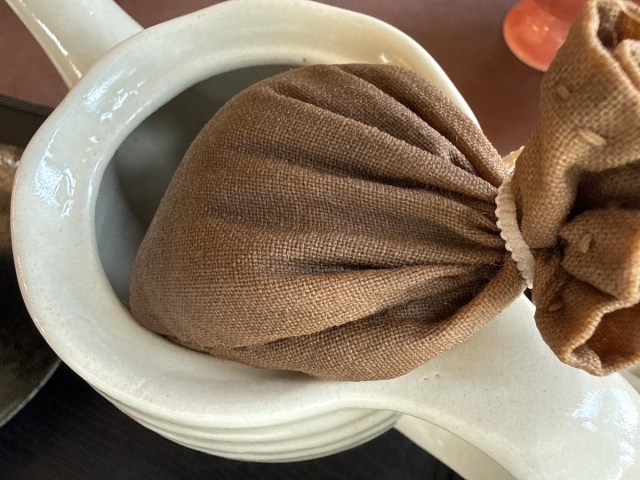
Cafe in Japan uses a recipe from an old document to recreate a historic brew.
Japan might be commonly associated with tea, but coffee is also a big part of the culture, having first been introduced here during the Edo period (1603-1868). Back in those early days, coffee was seen as a luxury item imported from abroad and only enjoyed by a select few who used it as a medicinal elixir. Though that might be hard to imagine now, one area of Japan is keeping the spirit of Edo-period coffee alive: Hirosaki City in Aomori Prefecture.
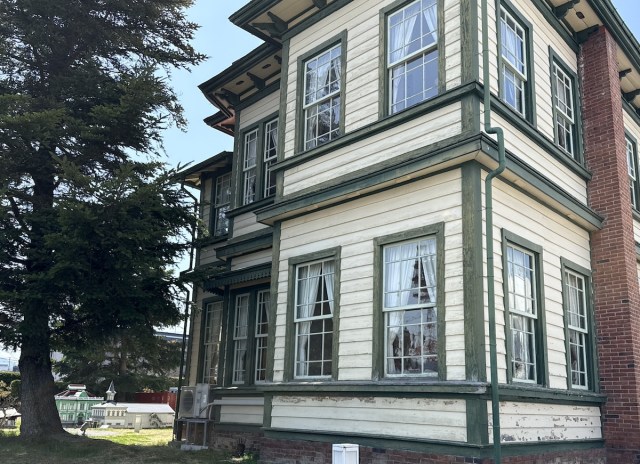
Historically, Hiirosaki was a city where many foreign teachers were employed, so retro buildings with Western-style architectural influences can be seen throughout the area. A lot of these buildings now function as cafes, creating a unique ambience that will make you feel as if you’ve stepped back in time, and one of those places is Salon de Café Ange.
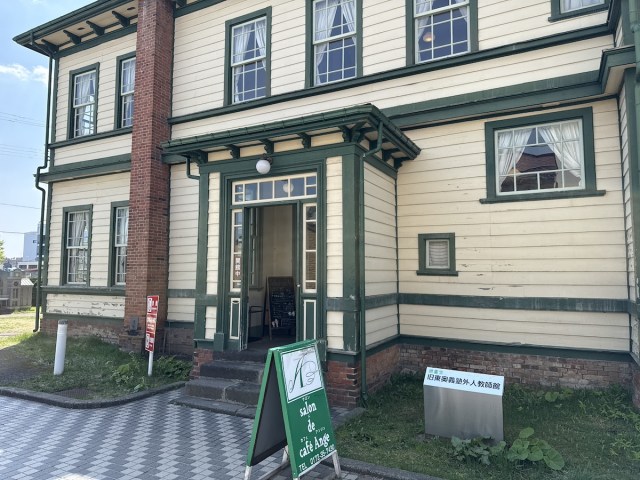
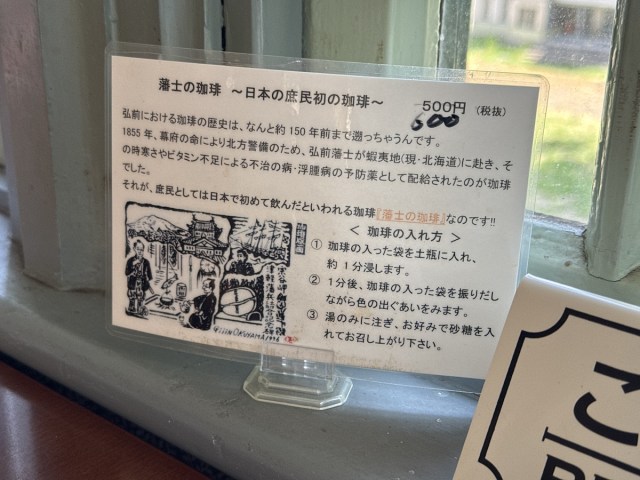
Here, they serve a very special drink called “Samurai Coffee“, using a recipe recreated from an old document that draws upon the area’s rich samurai history. During the Edo period, many samurai from the Hirosaki domain were sent to Ezo (modern-day Hokkaido) by order of the shogunate. At that time, coffee was distributed as a preventative measure against beriberi, a type of edema.
Although coffee beans themselves had been introduced to Japan during the Edo period’s era of isolation, through the controlled area of Dejima in Nagasaki Prefecture, it’s said that the first people to develop the habit of drinking coffee in Japan were samurai from the Hirosaki domain.
Currently, 10 shops in Hirosaki serve “Samurai Coffee”, made using the same methods described in historical documents, with the city determined to preserve its culture as a “coffee town”. Curious to try the coffee once enjoyed by warriors, we pulled up a chair at Salon de Café Ange, where a cup of the brew costs 600 yen (US$3.75).
When it arrived, we were surprised to see the coffee presented like a tea set, complete with a Japanese-style teapot.
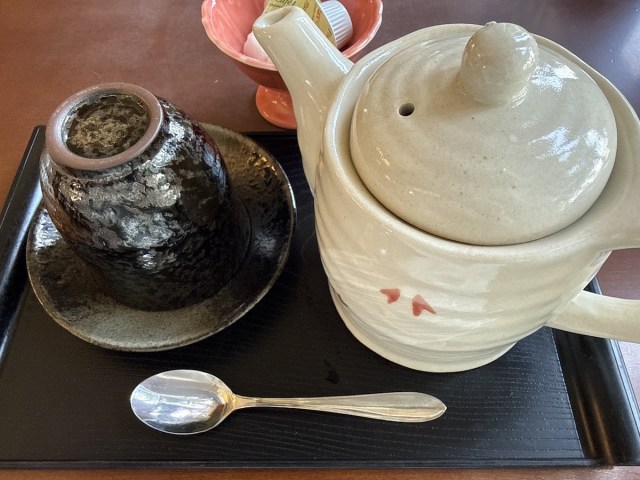
Coffee cups and paraphernalia likely weren’t common back then, so this rustic setup immediately took us back to a bygone era.
▼ When we lifted the lid we received another nice surprise.
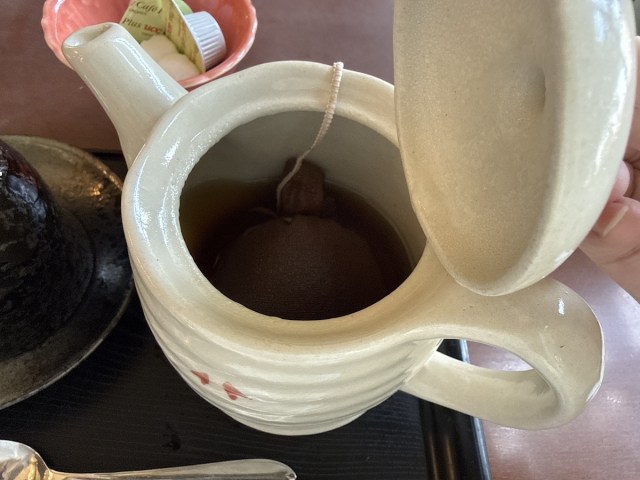
The roasted coffee beans, ground in a mortar, were bundled up in what looked to be a makeshift tea bag made out of a tiny burlap sack.
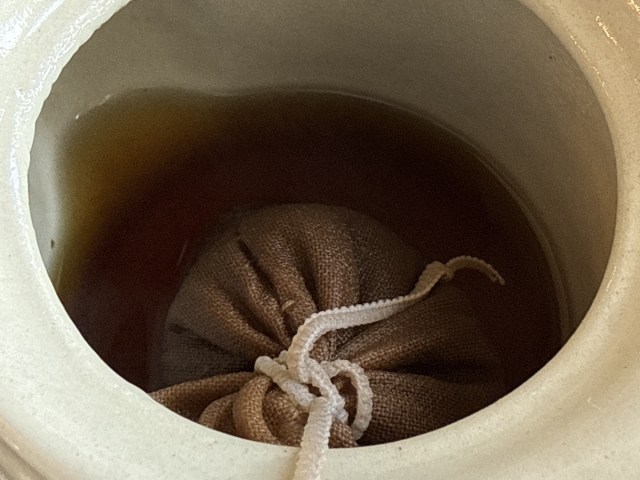
The sack was very cute, reminding us of the acorn sack carried by the Medium Totoro in Studio Ghibli’s animated feature My Neighbour Totoro. It also looked a bit like the drawstring bags used in medicinal baths that you sometimes see at public bathhouses. These bags fill the bathhouse with an intense aroma, and the medicinal ingredients ooze out when you squeeze them.
The teapot is already filled with hot water, so all you have to do is let it steep for about a minute. Then you can swirl the bag in the water, holding onto the attached ribbon, until it reaches your desired strength. When it gets to a colour you’re happy with, pour it into the teacup. We steeped ours for quite a long time, but the colour remained light, with an amber hue.
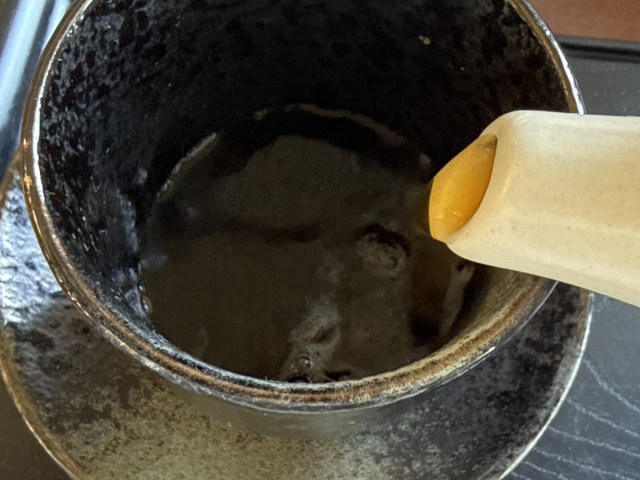
Since there are records of it being drunk as medicine, we braced ourselves for a hit of bitterness upon first sip, half expecting it to taste like a spicy, herbal craft cola. Although the cafe says you can add sugar to the brew, we were worried that might make it taste like licorice, so we kept it black and took a very tentative taste.
▼ Thankfully, it wasn’t bitter at all!
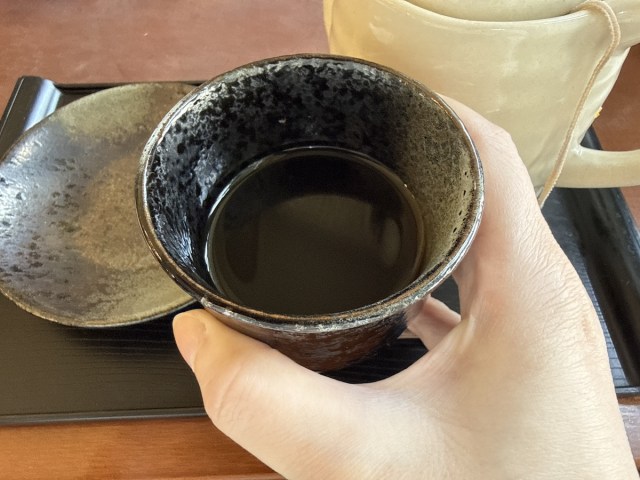
In fact, the flavour was gentle, mild, and very similar to kuromamecha (“black bean tea” made from roasted soybeans). Rather than being strong, the taste was on the weak side, and the temperature of the water was lukewarm as it took so long to brew.
It even went down smoothly like tea, with a very slight grassy taste, and we could imagine samurai easily swigging these down without any hesitation.
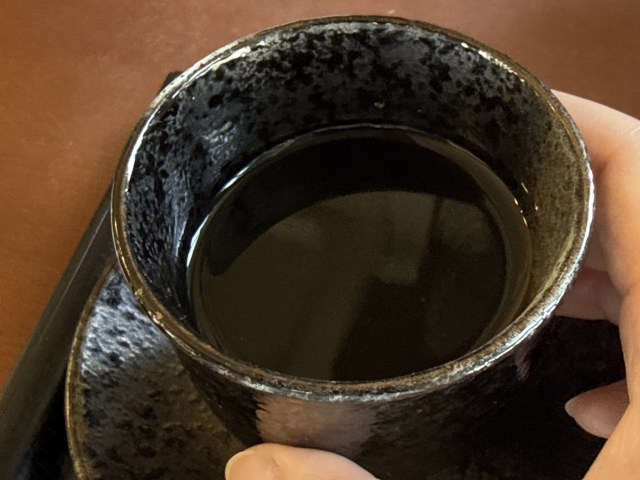
Drinking coffee from a teacup in a dollhouse-like Western-style building in an old samurai town is a reminder of where the humble cup of joe began in Japan. It wasn’t long after this that modern cafes began to spring up, with waitresses in white aprons serving coffee to customers in establishments that became glamorous gathering places for intellectuals.
▼ Hirosaki is also famous for apples, and the acclaimed apple pie at Salon de Café Ange was delicious.
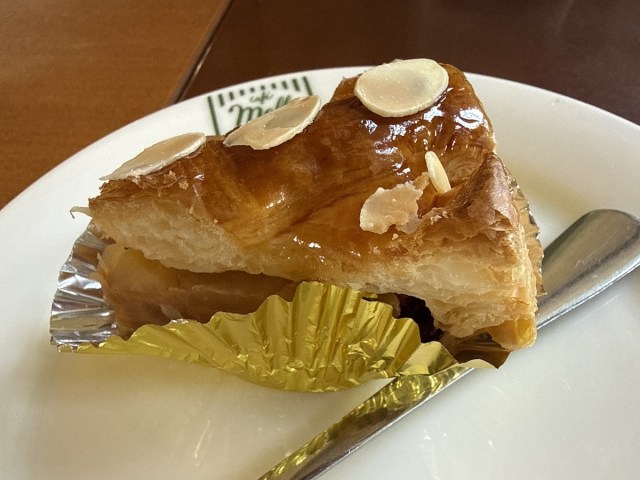
It’s not every day you get to enjoy a cup of coffee in the way it was enjoyed by Japanese warriors. So next time you’re visiting Hirosaki, which you can get to by overnight bus, don’t forget to stop for a taste of Samurai Coffee and help keep the old ways alive.
Cafe information
Salon de Café Ange / サロンドカフェアンジュ
Address: Aomori-ken, Hirosaki-shi, Shirogane-cho 2-1
青森県弘前市下白銀町2-1
Open 9:30 a.m.-6 p.m. (last orders 5:30 p.m.)
Images©SoraNews24
● Want to hear about SoraNews24’s latest articles as soon as they’re published? Follow us on Facebook and Twitter!


